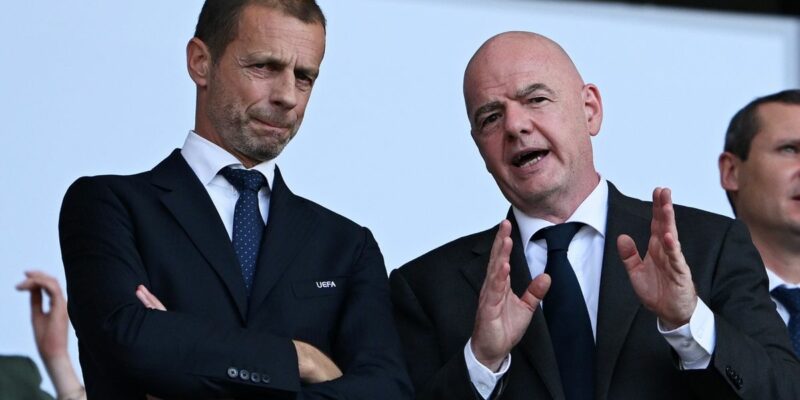
Aleksander Ceferin has taken another step in UEFA after approving new formats for the 2029 Nations League and 2030 World Cup qualifiers. Aleksander Ceferin and the UEFA Executive Committee convened on Wednesday in Istanbul, Turkey, to address proposed modifications to competition formats. Following the meeting, European soccer’s governing body announced approved changes to be implemented beginning with the 2029 Nations League and carrying through to the 2030 World Cup qualifiers.
In recent years, UEFA has shown a willingness to restructure its club competitions significantly. The introduction of the Conference League brought a third tier to European club football, while the replacement of the traditional group stage with a league phase format was rolled out across the Champions League, Europa League and Conference League. Wednesday’s decisions bring that reform mindset to the international stage.
The changes announced apply to competitions involving European national teams, with the timeline skewed toward the medium term. With the 2027 Nations League and Euro 2028 still operating under the existing format, the first edition to reflect the new structure will be the 2029 UEFA Nations League, followed by the World Cup qualifying campaign for the 2030 edition.
Changes for the 2029 Nations League
Managing the wide range of competitive levels among European national teams has always been a challenge, and one of the Nations League’s core purposes was to bring order to that imbalance by grouping nations into tiers and divisions. That structure will now be refined under the new format.
UEFA Nations League new format.
As confirmed in a statement released by UEFA on Wednesday, the Nations League will transition from four leagues to three, namely League A, League B and League C, each consisting of 18 national teams. Those teams will be divided into groups of six, with each side playing six matches against five different opponents, facing teams from other pots either home or away and meeting their same-pot opponent in a home-and-away format.
The one exception to the group-of-six structure applies to League C, where one group will contain seven teams. All other established mechanisms, including promotion and relegation between tiers and the quarterfinals and Final Four format hosted at a single venue, will remain in place.
Changes for the 2030 World Cup qualifiers
Up through the 2026 World Cup qualifying cycle, European teams were organized into 12 groups of varying sizes, with some containing four and others five teams depending on the adjustments required by Nations League Final Four participants. The upcoming cycle will introduce a broader, tier-based approach that mirrors the Nations League structure.
The new qualifying format will feature two tiers, League 1 and League 2. League 1 will include 36 nations drawn from the top two tiers of the Nations League, split into three groups of 12, with each team playing six matches against six different opponents, two from each seeding pot. The top finishers in each group will earn automatic qualification, with the remaining spots decided through a playoff system.
New format for the 2030 UEFA World Cup qualifiers.
League 2 will be composed of the remaining 18 to 19 nations from the Nations League, split into three groups of six, or one group of seven where necessary. UEFA president Čeferin framed the reforms as a meaningful step forward for the competition’s integrity and appeal. “The new formats will improve competitive balance, reduce the number of dead matches, offer a more appealing and dynamic competition to fans, while ensuring a fair qualification chance for all teams and without adding any additional dates in the international calendar,” he said.
These changes, alongside the broader structural concept, will be subject to further refinement in the coming months before receiving final approval at the next UEFA Executive Committee meeting, scheduled for September 15, 2026 in Thessaloniki, Greece, following the conclusion of the World Cup.