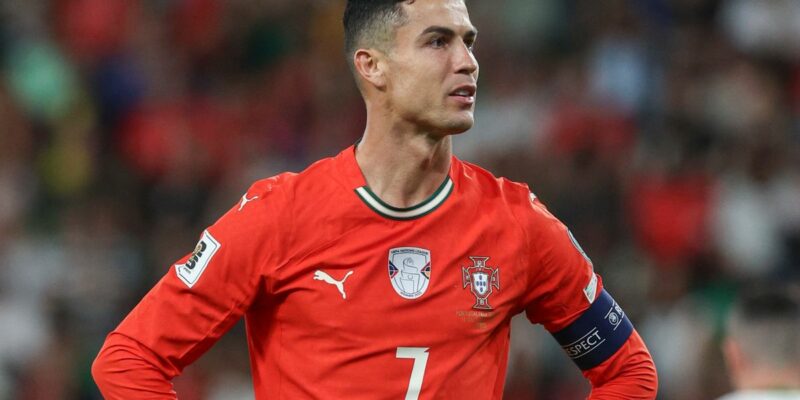
Cristiano Ronaldo and Portugal are preparing for what promises to be a challenging Group K campaign at the 2026 World Cup, but one of the national team’s rivals has encountered a significant setback just days before the tournament begins. While Portugal remains focused on its own preparations, developments surrounding DR Congo have added another layer […] Cristiano Ronaldo and Portugal are preparing for what promises to be a challenging Group K campaign at the 2026 World Cup, but one of the national team’s rivals has encountered a significant setback just days before the tournament begins. While Portugal remains focused on its own preparations, developments surrounding DR Congo have added another layer of uncertainty to an already fascinating group.
Group K has the potential to become one of the most competitive sections of the tournament. Portugal enters as the favorite, Colombia is viewed as a serious contender, Uzbekistan arrives as an ambitious newcomer, and DR Congo hopes to make a memorable return to the World Cup stage after more than five decades away.
The Congolese national team earned widespread admiration for securing qualification for its first World Cup since 1974. However, what should have been a period of celebration and preparation has instead become increasingly complicated due to circumstances beyond soccer.
The blow for DR Congo emerges
As preparations intensify ahead of the tournament, DR Congo has now suffered a major disruption. Spanish authorities canceled the national team’s scheduled June 9 friendly against Chile because of health concerns linked to the Ebola outbreak in the Democratic Republic of Congo.
Players of DR Congo pose for a team photograph
The match was due to take place in La Linea de la Concepcion, Spain, but local officials decided not to authorize the fixture following recommendations from regional health authorities. Juan Franco, mayor of La Linea de la Concepcion, confirmed the decision.
“I have signed the decree banning the holding of the 9 June match between the Democratic Republic of Congo and Chile‘, he told COPE, before emphasizing that the move was precautionary rather than punitive: “A report by the head of the mayoralty’s health service of La Línea advised categorically against hosting the match given the health risks which might arise.”
🚨 Se ha suspendido el amistoso que se va a jugar el 9 de junio entre Chile y RD Congo por el brote de ébola en el país africano🎙️ Hablamos con Juan Franco, alcalde de la Línea de la Concepción❌ “Lo más sensato es que no se celebrase el partido”📻 #PartidazoCOPE pic.twitter.com/wwRrPTr1Kn— El Partidazo de COPE (@partidazocope) June 2, 2026
Ebola concerns continue to affect preparations
The issue stems from an outbreak of the Bundibugyo strain of Ebola in eastern DR Congo. As a result, the national team had already abandoned plans to hold part of its pre-World Cup training camp in Kinshasa. Instead, the squad relocated its preparations to Belgium, where it continues to train ahead of the tournament.
Importantly, reports indicate that the players themselves are largely based outside the country through their respective clubs. Nevertheless, concerns regarding travel, support staff movement, and public health protocols have continued to create complications.
The outbreak has also attracted international attention because of the unique challenges it presents. According to reports, there is currently no approved vaccine specifically designed for the Bundibugyo strain, increasing caution among health authorities.
Aaron Wan-Bissaka of DR Congo interacts with teammates
DR Congo faces additional obstacles before tournament
The cancellation of the Chile friendly is only one of several issues facing DR Congo. The Guardian indicates that the national team has encountered travel restrictions, visa-related complications involving supporters, and strict entry requirements connected to the United States. These measures have forced officials to adjust plans repeatedly during the final weeks before the World Cup.
American authorities previously announced that individuals who had recently been in certain affected regions could face additional restrictions or isolation requirements before entering the country. Those circumstances have created uncertainty around preparations for a tournament that should represent one of the greatest moments in the country’s soccer history.