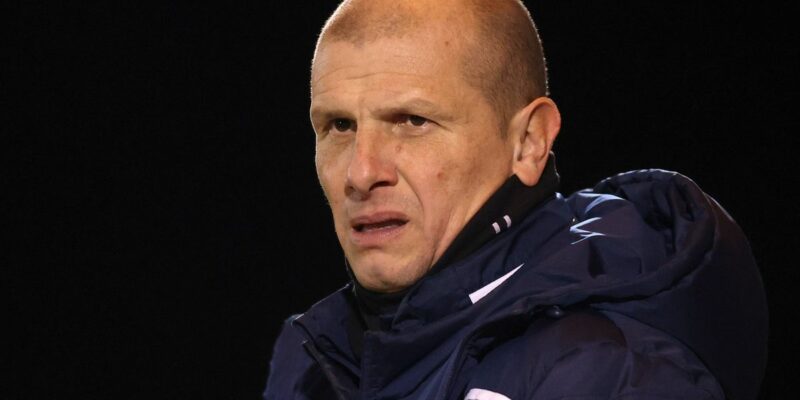
In an exclusive interview, Neil Cox discusses his rise from Scunthorpe to Aston Villa, his infamous fallout with Fabrizio Ravanelli, and coaching Montserrat during World Cup 2026 qualifying. He’s already built a legacy on the pitch, but now, Neil James Cox is constructing a legacy on the touchline. Born on October 8, 1971, Neil Cox joined Scunthorpe United’s academy in 1985 and ascended through the ranks before eventually making his first-team debut in 1990. It didn’t take long for him to make his presence felt, with Aston Villa coming calling and giving them a club-record outlay of £400,000 as well as 2,000 new seats at Glanford Park in order for Scunthorpe to adjust to English football’s new post-Hillsborough rules. After receiving a call from Scunthorpe assistant manager Bill Green about the transfer on a Sunday night, Cox was on a flight to Hong Kong to join Villa in training.
“It was quite funny, because I signed for Aston Villa on a Monday. I traveled down on a Monday, and on Tuesday, I was back in training, and we flew into Hong Kong with the first team,” stated Cox in an exclusive World Soccer Talk interview.
“Obviously, it was the middle of the season, and Aston Villa had been knocked out of the FA Cup early, so they had a spare two weeks and flew to Hong Kong. Obviously, I had gone from being a Scunthorpe boy who had been playing in the local leagues, very, very low-key, to traveling to Hong Kong to play two games in front of 100,000 people. It was completely strange, but in those two weeks, I got to know players like David Platt, Paul McGrath, Kent Nielsen, Tony Daly—some really top players who really looked after me. On that trip, I got taught how to behave, how to do things properly, how higher-end players look after themselves, and how they make sure they do everything right. I think that two weeks away was a settling learning curve for me that helped me.”
Cox seamlessly transitioned from the English fourth tier to the top flight, making 60 appearances for Villa and emerging as a key figure at right back and center back. He was able to take part in both the First Division as well as the newly formed Premier League, as well as helping them beat Manchester United in the 1994 Football League Cup Final, ending a 12-year trophy drought.
After guiding Villa to greatness at Wembley, Cox left Birmingham and became the first player to break the £1 million transfer fee mark for Middlesbrough, where he surpassed expectations and earned praise from the likes of Troy Townsend. He quickly established himself as an integral figure for Boro’s defense, guiding them to the First Division title and making it to the 1994–95 First Division Team of the Year, before helping them consolidate their presence in the Premier League.
The spring of 1997 proved to be a rollercoaster for Middlesbrough, who lost to Leicester City in the League Cup Final before taking on Chelsea in the FA Cup Final. Cox was unable to participate, however, after getting into a heated altercation with teammate Fabrizio Ravanelli over the Italian’s fitness prior to the game and being dropped on the morning of the final.
Ravanelli lasted just 24 minutes before begging to be subbed off, having previously claimed that he was fit, whilst Chelsea prevailed 2-0. Shortly after, Boro were docked three points for failing to fulfill a fixture following a flu outbreak in the squad and were relegated to the second tier. Cox eventually decided to leave for Bolton Wanderers in 1997, where he led them to the verge of promotion only to lose to Watford. Six months later, Cox made the move to Watford for £500,000, where, after suffering relegation and being dropped to the reserves, he would insert himself into the Hornets’ defense due to an injury crisis.
“Watford was a strange one, because obviously, Colin Todd got the sack, Sam Allardyce had come in at Bolton, and I was out of contract at the end of the season, and he had 4 or 5 months left. Big Sam says, ‘We need some money, and Watford had made an offer to you, do you want to go down and speak to them?’ I went to speak to Graham Taylor, who I knew really well from the Scunthorpe side, because he’s a Scunthorpe lad, same as I am, so we did know each other a little bit. I went down there, they offered me a long-term contract, and I just thought it was something that, with Bolton not offering me a new deal, as players, you’re just a bit wary of where the next contract’s going to come from, so I jumped on the opportunity to go play for Watford. I knew it would be a tough, tough ask: they started the season well in the Premiership, but they were just on a little bit of a slide, and they had no money to invest in the team. It was going to be a tough move, and I just thought it was something that was advancing me a little bit to go to big clubs that had just got promoted to a team that was struggling, probably made me a better player and stronger personality-wise… that’s why I went.”
Having forged a rock-solid pairing in central defense with Filippo Galli and made 246 appearances for the Hornets, Cox headed to Cardiff City, where he spent a season before dropping down from the second tier to the third tier with Crewe Alexandra.
He retired in 2008 and transitioned into coaching with non-league side Leek Town, although he briefly came out of retirement and played four matches for the club due to a spate of injuries. Cox then reunited with ex-teammate Neal Ardley as the assistant manager at League Two side AFC Wimbledon, where they achieved promotion to League One during their six-year spell, followed by a spell at League Two side Notts County.
After nearly eight years as Ardley’s #2, Cox took charge of Scunthorpe United, where he narrowly managed to eke out safety before getting the sack in November 2021. Cox then reunited with Ardley at National League outfit York City before deciding to team up with Lee Bowyer as an assistant coach with the Montserrat national team. He’s spent the past eight months residing in West Yorkshire alongside his daughter, his daughter’s boyfriend, and his granddaughter, recharging his batteries and gearing up for yet another chapter in his coaching career.
“It was brilliant to work for Montserrat. I still lived in the UK, and it was like any World Cup games, you play some at home, some away, but we played all our games away. Some of the lads that turned up for Montserrat never played football at all; they didn’t even play on a Saturday or a Sunday for anybody. They worked for British Rail, or they worked for somebody else, and you just had to get them together, and then they played for their country.
“We had to organize ourselves defensively, because we didn’t have much quality going forward. There were a lot of non-league players, but we did really well for a team. We traveled all the way around the world from the UK; Lee and I worked hard to go watch players as much as we could, but we just had to get together. We really only had 22 players to pick from, and if some of them were injured, every time we went on World Cup duty, we only had 2 games to play with 15 players, which was difficult. We went to El Salvador, we went everywhere to play these football games with this little team, this little country, but that was passionate about their football.”