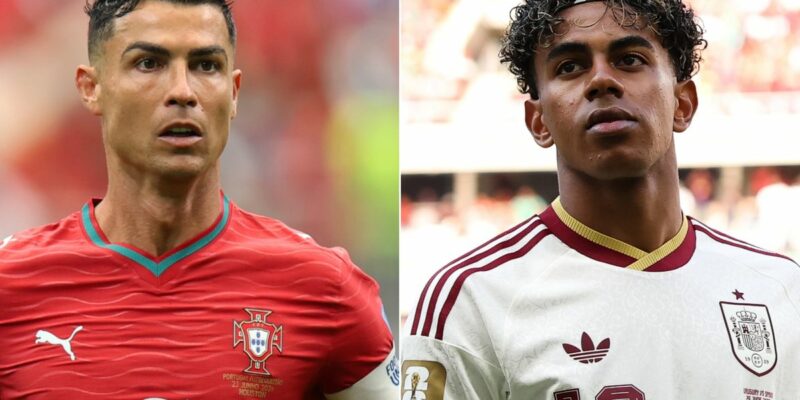
As tensions continue to rise between FIFA and UEFA, Spain and Portugal have become central figures in a dispute that could reshape the future of international soccer, although the full implications remain unclear.
Gianni Infantino is facing mounting pressure after FIFA’s controversial commercial proposal triggered fresh uncertainty around the 2030 World Cup. As tensions continue to rise between FIFA and UEFA, Spain and Portugal have become central figures in a dispute that could reshape the future of international soccer, although the full implications remain unclear.
The growing conflict stems from FIFA‘s proposal to establish FIFA Forward Enterprise (FFE), a new commercial subsidiary designed to manage the governing body’s major competitions. While FIFA insists the project would generate billions for soccer development, critics argue the plan risks changing the identity of the World Cup and weakening trust between the sport’s governing bodies.
The controversy began after FIFA unveiled plans to create FIFA Forward Enterprise, a company valued at roughly $20 billion, which would oversee commercial rights linked to the World Cup and other FIFA tournaments.
Under the proposal, up to 20% of the company could be sold to private investors, with FIFA hoping to raise approximately $4.2 billion. According to FIFA, the additional revenue would significantly increase financial support for its 211 member associations, with some federations eligible to receive as much as $40 million if they approve the proposal before the September deadline.
FIFA President Gianni Infantino speaks about the 2026 World Cup with U.S. President Donald Trump
Spain and Portugal find themselves at the heart of the dispute
The situation has become especially sensitive because Spain, Portugal and Morocco are scheduled to host the 2030 World Cup, while Uruguay, Argentina and Paraguay will stage the tournament’s opening centenary matches.
Although Spain and Portugal have not individually announced they are withdrawing, Spanish newspaper El Español indicates that both countries are considering abandoning their hosting role if FIFA refuses to change course.
The reports are directly connected to UEFA’s collective position, rather than independent decisions by the two countries. Because both federations belong to UEFA, they are expected to follow the confederation’s stance if the dispute remains unresolved.
Joao Felix #11 of Portugal competes for the ball against Pedro Porro #12 of Spain.
UEFA threatens boycott as FIFA refuses to back down
The major turning point came when all 55 UEFA member associations unanimously voted to oppose FIFA’s proposal, warning they would boycott FIFA competitions if the project continues.
According to UEFA: “The World Cup cannot be treated as an investment product.” The governing body added: “It is one of football’s greatest sporting legacies. It has been built over generations by players, national teams and supporters across every continent. No part of it should ever be surrendered to private investors. The World Cup is not for sale.”
That position means Spain and Portugal could ultimately be prevented from participating in, or even hosting, the very tournament they are preparing to stage, should UEFA carry out its threat and FIFA move forward with the proposal. Such a scenario would be unprecedented in World Cup history.
FIFA President, Gianni Infantino in conversation with UEFA President Aleksander Ceferin
As criticism intensified, FIFA publicly defended the proposal and rejected suggestions that it intends to privatize the World Cup. FIFA stated: “Nobody is selling football. This is not something FIFA would ever entertain.”
The organization also insisted that the consultation process would continue despite widespread opposition. FIFA added: “Everyone has the right to express their opposition and to seek further clarification, but no single entity can claim to represent all 211 Member Associations around the world.”
Statement on behalf of UEFA and its 55 National Associations— UEFA (@UEFA) July 30, 2026
Morocco remains cautious
Unlike Spain and Portugal, Morocco is not a UEFA member and therefore is not bound by the European confederation’s collective position. The African nation has remained publicly silent throughout the controversy while continuing preparations for its first men’s World Cup.
Massive investments are already underway, including the construction of the Grand Stade Hassan II and upgrades to stadiums, transport infrastructure and tourism facilities. That cautious approach leaves Morocco in a unique position if disagreements between FIFA and UEFA continue to escalate.