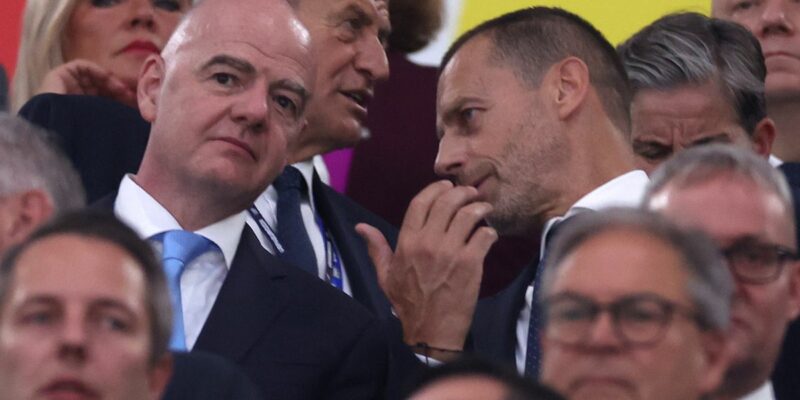
While UEFA continues to rally opposition, FIFA has now received public backing from an unexpected corner of Europe, dealing an early setback to efforts aimed at presenting a united front against the governing body’s plans.
Gianni Infantino’s controversial proposal to reshape the commercial future of the World Cup has divided soccer like few governance issues in recent memory. While UEFA continues to rally opposition, FIFA has now received public backing from an unexpected corner of Europe, dealing an early setback to efforts aimed at presenting a united front against the governing body’s plans.
The debate centers on FIFA’s proposal to create FIFA Forward Enterprise (FFE), a new commercial subsidiary that would oversee the World Cup, Club World Cup and other major competitions while selling minority stakes to private investors. With member associations facing a September 19 deadline to decide whether to support the project, the political battle surrounding soccer’s biggest tournament continues to intensify.
According to reports from The Associated Press, Sky News and several other outlets, FIFA is seeking approval from its 211 member associations to launch FIFA Forward Enterprise, a company valued at around $20 billion. Under the proposal, FIFA would sell minority, non-controlling stakes worth approximately $4.2 billion, while maintaining overall control of soccer governance, international competitions and the global calendar.
In a letter to member associations, Infantino described the proposal as “a singular and unique funding opportunity.” He added: “It is my duty and responsibility as FIFA president to present such game-changing opportunities to you, our members.”
FIFA President Gianni Infantino speaks about the 2026 World Cup with U.S. President Donald Trump
Should the project receive majority approval, each member association could receive funding packages worth up to $40 million, significantly increasing the financial support available for infrastructure, grassroots soccer, coaching and national team development.
The first European association publicly breaks ranks
While UEFA has led fierce resistance to FIFA’s plans, the Czech Republic has emerged as the first European nation to publicly support Infantino’s proposal. David Trunda, president of the Czech Football Association, believes the additional investment could benefit soccer development in his country despite widespread criticism elsewhere across Europe.
Speaking to Sky News, Trunda said: “I can see the pragmatic benefits for Czech soccer from working in close co-operation with Gianni Infantino and his team.” He continued: “Of course we need more details, but my personal point of view is that I can see the positive impact of FIFA’s intentions.”
Ladislav Krejci of Czechia celebrates scoring his team’s first goal
Trunda also highlighted his own experience working alongside FIFA since taking office last year. He added: “I was elected a little more than a year ago and for me personally all the projects I have experienced in cooperation with FIFA have been very positive for the development of European soccer.”
His comments represent the first major public endorsement of FIFA’s proposal from within UEFA’s membership, potentially complicating the confederation’s attempt to maintain complete unity.
Why FIFA believes the proposal is necessary
Infantino has consistently argued that the proposal is designed to benefit soccer globally rather than outside investors. According to FIFA, FFE would consolidate broadcasting rights, sponsorship agreements, ticketing, licensing and commercial operations, allowing the governing body to generate far higher income for member associations over the coming decade.
Pedro Porro #12 of Spain kisses the World Cup Winner’s Trophy.
Infantino said: “Football is the world’s most popular sport and an extraordinary engine of human and social development.” He also insisted that FIFA would retain exclusive authority over governance, competitions, regulations and the international calendar, even after outside investment enters the new company.