The 2026 World Cup is not disappointing fans. Lionel Messi and several other stars have already stood out in impressive fashion. In addition, several teams have already secured their place in the knockout stages, while some of the third-place spots are still yet to be decided. Unlike previous editions, the 2026 World Cup has managed to impress fans across the globe. Not only has Lionel Messi been shining, but so have Kylian Mbappé, Harry Kane, and several other stars. In addition, teams such as Cape Verde, Ghana, DR Congo, and others have surprised many with their impact. However, while some national teams have already secured their place in the knockout stages, the third-place positions are still not completely decided.
Following FIFA‘s decision to expand the World Cup to 48 national teams, 32 teams advance to the knockout stages of the tournament, divided into 24 direct qualification spots and 8 teams that qualify as the best third-placed finishers. United States, Mexico, Germany, France, Norway, Argentina, and Colombia have been the first national teams to secure their place in the next round.
As a new feature of the 2026 World Cup, FIFA has decided to include knockout-stage spots for third-place teams. To do this, the 12 teams are placed into a wildcard table, where only the top 8 advance to the Round of 32. To determine the rankings, FIFA has established a series of criteria that serve as tiebreakers.
2026 World Cup third-place tiebreakers explained
With 12 national teams finishing third in the 2026 World Cup, FIFA has established five criteria to determine which 8 national teams advance to the knockout stages. As the first option, the number of points accumulated across the three matches serves as the main tiebreaker. Therefore, teams that have earned four points or more will have a greater advantage in securing their place. However, the remaining national teams still have a chance to qualify.
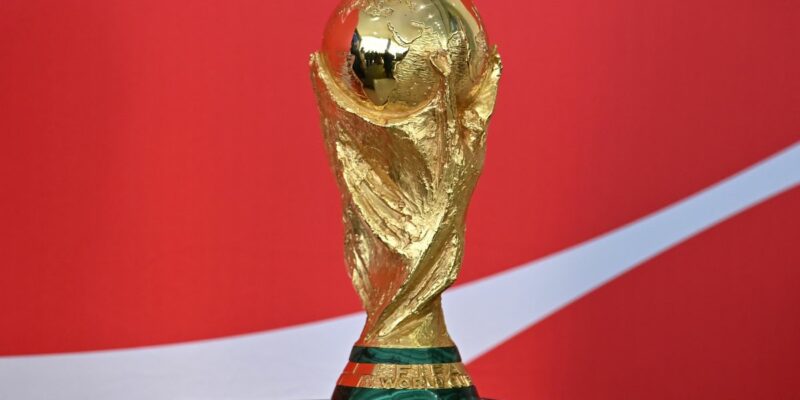
FIFA President Gianni Infantino holds the FIFA World Cup trophy.
If multiple national teams are tied on points, FIFA uses goal difference across the three group-stage matches as the second criterion. With this in mind, teams that have scored more goals than they have conceded have a better chance of reaching the knockout stages. If teams remain tied, they apply total goals scored as the third tiebreaker, favoring the more prolific attacking teams.
As a fourth tiebreaker criterion, FIFA evaluates the disciplinary record of the national teams, based on the cards accumulated, assessed as follows: a yellow card equals -1 point, an indirect red card (second yellow) equals -3 points, a direct red card equals -4 points, and a yellow card plus a direct red card equals -5 points. The team with the fewest negative points will earn the spot. Finally, FIFA uses the FIFA World Ranking as the last tiebreaker criterion.